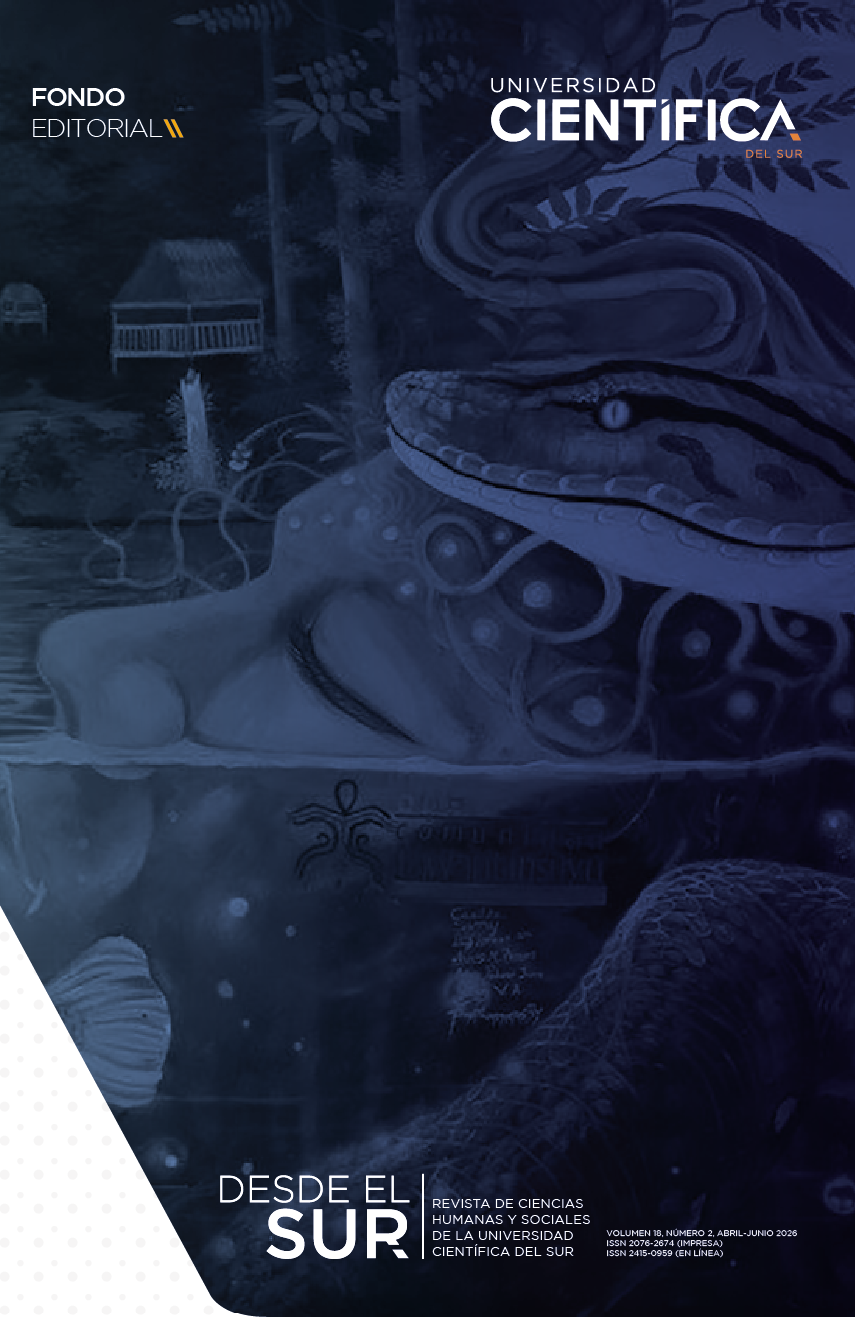
A friend is a light shining in the darkness: An autoethnography on the role of critical friends during my doctoral thesis
DOI:
https://doi.org/10.21142/DES-1802-2026-e0047Keywords:
Research training, peer relationships, Support networkAbstract
Introduction: This article examines the role of the critical friend in the formation of researchers through an autoethnography based on a doctoral experience in Latin America. While the literature has largely emphasized the figure of the mentor as the central guide in research training, this relational role has received limited attention. Objective: The aim of this study is to explore how the critical friend contributes to formative, methodological, and ethical support during the research training process. Methodology: An autoethnographic approach supported by a visual diary was employed, allowing for the articulation of personal, relational, and academic dimensions and understanding research as an intellectual, emotional, and situated process. Results: In the absence of a mentor throughout my development as a researcher, two critical friends emerged. With Marili, the relationship involved negotiating between critique and unconditional support, learning to sustain discomfort without breaking the bond. With Miguel, empathic listening and collaborative reflexivity supported methodological and ethical decision-making. Conclusion: The critical friend emerges as a key relational figure in researcher training, expanding traditional forms of academic accompaniment.
Downloads
References
Alan, B., Sariyev, H. y Odabasi, H. F. (2021). Critical Friendship in Self-Study. Journal of Qualitative Research in Education, (25).
Arreola Rodríguez, K. R. (2025). Speaking the «friend language»: a visual diary of participant–researcher relationships. Journal of Creative Research Methods, 1(1), 145-157. https://doi.org/10.1332/30502969Y2025D000000009
Bambino, D. (2002). Critical friends. Educational Leadership, 59(6), 25-28.
Baskerville, D. y Goldblatt, H. (2009). Learning to be a critical friend: From professional indifference through challenge to unguarded conversations. Cambridge Journal of Education, 39(2), 205-221. https://doi.org/10.1080/03057640902902260
Brewer, C., Wideman-Johnston, T. y McCabe, M. (2021). Better Together: The Role of Critical Friendship in Empowering Early Career Academics. IN Education, 26(2). https://journals.uregina.ca/ineducation/article/view/490
Behar, R. (1996). The vulnerable observer. Anthropology that breaks your heart. Beacon Press.
Bochner, A. P. (2017). Heart of the Matter: A Mini-Manifesto for Autoethnography. International Review of Qualitative Research, 10(1), 67-80.
Clandinin, D. J., Pushor, D. y Orr, A. M. (2007). Navigating Sites for Narrative Inquiry. Journal of Teacher Education, 58(1), 21-35. https://doi.org/10.1177/0022487106296218
Clift, B. C., Costas Batlle, I., Bekker, S. y Chudzikowski, K. (Eds.). (2023). Qualitative researcher vulnerability. Negotiating, experiencing and embracing. Routledge.
Coghlan, D. y Brydon-Miller, M. (Eds.). (2014). The SAGE encyclopedia of action research. SAGE Publications. https://doi.org/10.4135/9781446294406
Colby, M. y Appleby, R. (1995). Reflective practice through critical friendship: Some possibilities. Cambridge Journal of Education, 25(2), 149-160.
Consoli, S. y Ganassin, S. (Eds.). (2023). Reflexivity in applied linguistics. Opportunities, challenges, and suggestions. Routledge.
Costa, A. y Kallick, B. (1993). Through the lens of a critical friend. Educational Leadership, 51(2), 49-51.
Davis, J., Sakwe, A., Ramesh, A., Lindsey, M. y Woods, L. (2023). How to be a GREAT mentor. Advances in Physiology Education, 47(3), 584-588. https://doi.org/10.1152/advan.00054.2023
Elder, G. H., Jr. y Giele, J. Z. (Eds.). (2009). The craft of life course research. Guilford Press.
Edwards, J. (2021). Ethical Autoethnography: Is it Possible? International Journal of Qualitative Methods, 20, 1-6. https://journals.sagepub.com/doi/10.1177/1609406921995306
Ellis, C. (2007). Telling Secrets, Revealing Lives: Relational Ethics in Research with Intimate Others: Relational Ethics in Research with Intimate Others. Qualitative Inquiry, 13(1), 3-29. https://doi.org/10.1177/1077800406294947
Ellis, C. y Bochner, A. (2000). Autoethnography, Personal Narrative, Reflexivity: Researcher as Subject. En N. Denzin e Yvonna L. (eds.), The Handbook of Qualitative Research (pp. 733-768). (2.ª ed.). Sage.
Ellis, C. y Bochner, A. P. (Eds.). (1996). Composing ethnography. Alternative forms of qualitative writing. AltaMira Press.
Ellis, C., Adams, T. E. y Bochner, A. P. (2010). Autoethnography: An Overview. Forum Qualitative Sozialforschung Forum: Qualitative Social Research, 12(1). https://doi.org/10.17169/fqs-12.1.1589
Fernández-Fastuca, L. (2021). ¿Por qué directores y tesistas deciden discontinuar la relación pedagógica? magis. Revista Internacional de Investigación en Educación, 14, 1-26. http://doi.org/10.11144/Javeriana.m14.pqdt
Fernández-Fastuca, L. y Wainerman, C. (2015). La dirección de tesis de doctorado: ¿una práctica pedagógica? Perfiles Educativos, 38(148), 156 -171.
Finlay, L. (2002). Negotiation the swamp: the opportunity and challenge of reflexivity in research practice. Qualitative Research, 2(2), 209-230.
Finlay, L. (2008). Reflecting on «reflective practice». (PBPL Paper 52). The Open University. https://oro.open.ac.uk/68945/1/Finlay-%282008%29-Reflecting-on-reflective-practice-PBPL-paper-52.pdf
Forni, P. (2020). Recomendaciones metodológicas para elaborar la estrategia metodológica del proyecto de tesis. En C. Wainerman (coord.), En estado de tesis. Cómo elaborar el proyecto de tesis en Ciencias Sociales (pp. 227-257). Manantial.
Gess, C., Wessels, I. y Blömeke, S. (2017). Domain-specificity of research competencies in the social sciences: Evidence from differential item functioning. Journal for Educational Research Online, 9(2), 11-36. https://www.pedocs.de/volltexte/2017/14895/pdf/JERO_2017_2_Gess_Wessels_Bloemeke_Domain-specificity_of_research.pdf
Gibbs, P. y Angelides, P. (2008). Understanding friendship between critical friends. Improving Schools, 11(3), 213-225. https://doi.org/10.1177/1365480208097002
Gillway, M. y Sanchez, S. (2022). Collaborative reflexivity through feedback dialogues: Developing the research and the doctoral researcher. En S. Consoli y S. Ganassin (eds.), Reflexivity in applied linguistics: Opportunities, challenges, and suggestions (pp. 134-152). Routledge.
Guber, R. (2011). La etnografía. Método, campo y reflexividad. Siglo XXI.
Guston, D. (1993). Responsible Science. Ensuring the Integrity of the Research Process. Mentorship and the Research Training Experience. National Academy Press.
Hammersley, M. (2004). Teaching qualitative method: Craft, profession, or bricolage? En C. Seale, H. Globo y D. Silverman (Eds.), Qualitative research Practice (pp. 549-560). London Sage.
Hernández-Hernández, F. y Sancho-Gil, J. M. (2015). A Learning Process within an Education Research Group: An Approach to Learning Qualitative Research Methods. International Journal of Social Research Methodology, 18(6), 651-667.
Hunt, J. C. (1989). Psychoanalytic aspects of fieldwork. SAGE.
Josselson, R. (2007). The ethical attitude in narrative research. Principles and practicalities. En D. J. Clandinin (ed.), Handbook of narrative inquiry. Mapping a methodology (pp. 537-564). SAGE. https://www.ruthellenjosselson.com/uploads/2/4/9/6/24960444/ethics_chapter_as_converted_pdf.pdf
Josselson, R. (2011). Bet you think this song is about you. Narrative Matters, 1(1), 33-51.
Josselson, R. (2013). Interviewing for Qualitative Inquiry. A Relational Approach. SAGE.
Kara, H. (2015). Creative research methods. A practical guide. Policy Press.
MacBeath, J. y Jardine, S. (1998). I didn’t know he was ill — the role and value of the critical friend. Improving Schools, 1(1), 41-47.
MacPhail, A., Tannehill, D. y Ataman, R. (2021). The role of the critical friend in supporting and enhancing professional learning and development. Professional Development in Education, 50(4), 597-610. https://doi.org/10.1080/19415257.2021.1879235
Mallon, S. y Elliott, I. (2019). The Emotional Risks of Turning Stories into Data: An Exploration of the Experiences of Qualitative Researchers Working on Sensitive Topics. Societies, 9(3), 1-17. https://doi.org/10.3390/soc9030062
Mat Noor, M. y Shafee, A. (2020). The role of critical friends in action research: A framework for design and implementation. Practitioner Research, 3, 1-33.
Moustakas, C. (1990). Heuristic Research. Design, Methodology and Applications. SAGE.
Nind, M., Holmes, M., Insenga, M., Lewthwaite, S. y Sutton, C. (2019). Student perspectives on learning research methods in the social sciences. Teaching in Higher Education, 25(7), 797-811.
O’Hara S. (2018). Autoethnography: The Science of Writing Your Lived Experience. HERD, 11(4), 14-17. https://doi.org/10.1177/1937586718801425
Olmos-Vega, F. M., Stalmeijer, R. E., Varpio, L. y Kahlke, R. (2023). A practical guide to reflexivity in qualitative research: AMEE Guide No. 149. Medical Teacher, 45(3), 241-251. https://doi.org/10.1080/0142159X.2022.2057287
Pearson, M. (1999). The Changing Environment for Doctoral Education in Australia: Implications for quality management, improvement and innovation. Higher Education Research & Development, 18(3), 269-287.
Pelias, R. (2004). Methodology of the Heart. Evoking Academic and Daily Life. Altamira Press.
Salmons, J. (2022). What makes a good mentor? https://researchmethodscommunity.sagepub.com/blog/what-makes-a-good-mentor
Schunk, D. H. y Mullen, C. A. (2013). Toward a conceptual model of mentoring research: Integration with self-regulated learning. Educational Psychology Review, 25(3), 361-389. https://doi.org/10.1007/s10648-013-9233-3
Stenhouse, L. (1975). An introduction to curriculum research and development. Heinemann.
Swaffield, S. (3-6 de enero de 2002). Contextualising the work of the critical friend. 15th International Congress for School Effectiveness and Improvement (ICSEI), Copenhagen, University of Cambridge.
Swaffield, S. (2004). Critical friends: supporting leadership, improving learning. Improving Schools, 7(3), 267-278. https://doi.org/10.1177/1365480204049340
Swaffield, S. y MacBeath, J. (2005). School Self-Evaluation and the Role of a Critical Friend. Cambridge Journal of Education, 35(2), 339-252. https://www.tandfonline.com/doi/abs/10.1080/03057640500147037
Tekeste, M. (2025). Under pressure: Becoming the good enough academic. Organization, 0(0). https://doi.org/10.1177/13505084251383285
Urcia, I. A. (2021). Comparisons of Adaptations in Grounded Theory and Phenomenology: Selecting the Specific Qualitative Research Methodology. International Journal of Qualitative Methods, 20. https://doi.org/10.1177/16094069211045474
Wainerman, C. y Sautu, R. (1997). La trastienda de la investigación. Manantial.
Wessels, I., Rueß, J., Jenßen, L., Gess, C. y Deicke, W. (2018). Beyond Cognition: Experts' Views on Affective-Motivational Research Dispositions in the Social Sciences. Frontiers in Psychology, 9, 1300. https://doi.org/10.3389/fpsyg.2018.01300
Wideman-Johnston, T. y Brewer, C. (2014). Developing and maintaining a critical friendship in academia. Journal of Authentic Leadership in Education, 3(2), 1-7.
Downloads
Published
Issue
Section
License

Esta obra está bajo una licencia http://creativecommons.org/licenses/by-nc-sa/4.0/