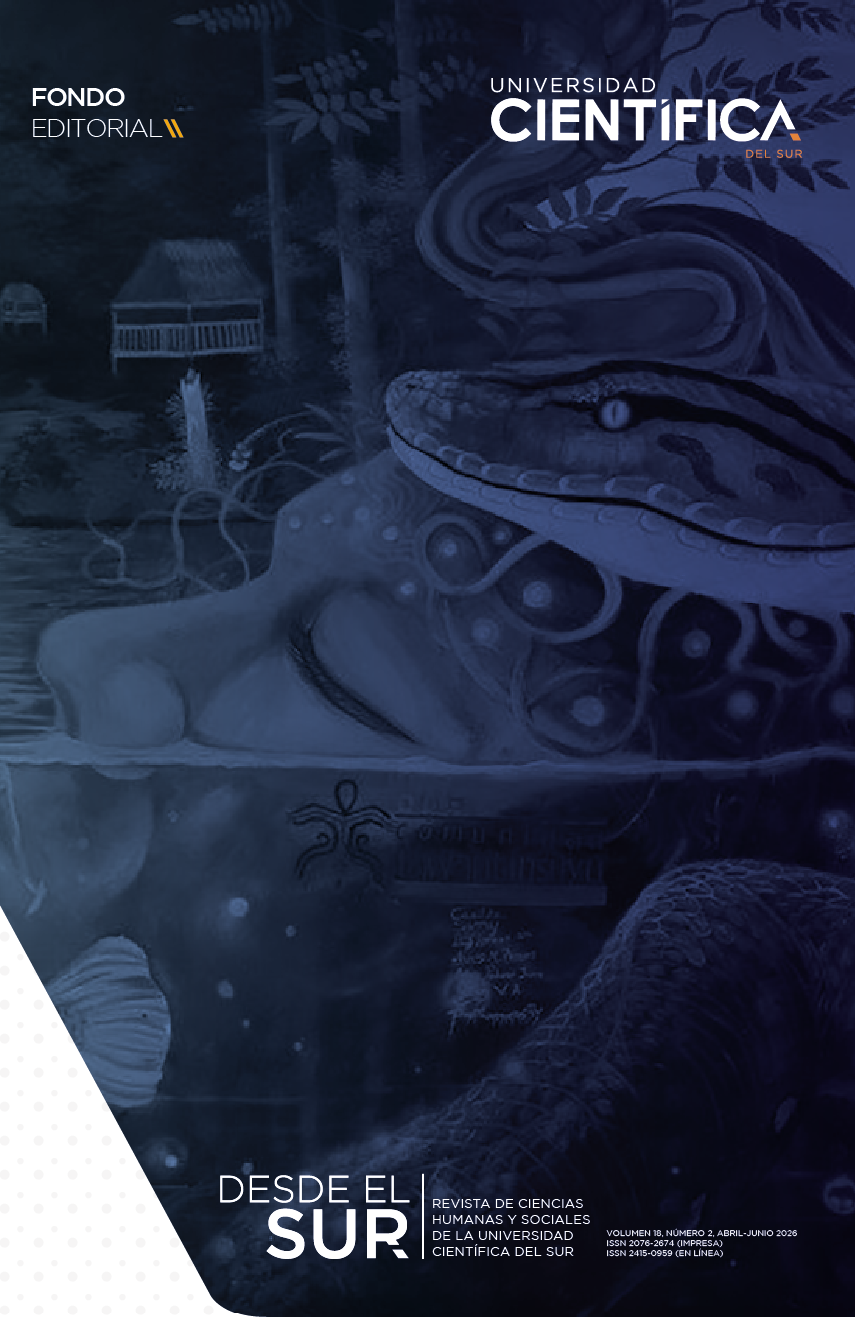
Apuntes sobre prácticas y teorías mayas de relación
DOI:
https://doi.org/10.21142/DES-1802-2026-e0038Palabras clave:
relaciones, mayas, ontologíasResumen
El acto de existir presupone una práctica relacional, un constante estar-en-el-mundo, que define la existencia y permite el aflorar de las sabidurías y las filosofías. Este artículo tiene como objetivo explorar el carácter relacional de las ontologías mayas de diferentes temporalidades y contextos, con una reflexión sobre relaciones que definen la existencia, la memoria y la identidad de los grupos mayas. De este modo, se establece un puente entre diferentes temporalidades, en las cuales pasado, presente y futuro se entrelazan y cohabitan en modos de omnipresencia. A partir de un movimiento de escuchar las sabidurías de las comunidades mayas contemporáneas desde adentro, discutiré diferentes casos que explicitan el carácter fundamental de la experiencia de la relación para la vida y la formación de los seres. Con los casos discutidos a lo largo de este artículo será posible sentipensar cómo las prácticas relacionales se constituyen en las bases de las ontologías mayas de diferentes temporalidades y espacios, considerando que el ser maya está construido desde un permanente movimiento de contacto con otros seres humanos y más-que-humanos, paisajes y temporalidades otras.
Descargas
Referencias
Arzápalo Marín, H. R. (1995), Calepino de Motul. Diccionario maya-español. Universidad Nacional Autónoma de México, Instituto de Investigaciones Antropológicas.
Astor Aguilera, M. A. (2010). The Maya World of Communicating Objects. Quadripartite Crosses, Trees, and Stones. University of New Mexico.
Balsanelli, A. (2021). When prey is winik (person): the relationship between people, animals, and their Masters in Lacandon hunt. Estudios Latinoamericanos, 41, 67-84. https://estudioslatinoamericanos.pl/index.php/estudios/article/view/386
Barad, K. (2007). Meeting the Universe Halfway: Quantum Physics and the Entanglement of Matter and Meaning. Duke University Press.
Barrera Vásquez, A. (Coord.). (1980). Diccionario maya-español, español-maya. Cordemex.
Blaser, M. (2010). Storytelling Globalization from the Chaco and Beyond. Duke University Press
Brown, L. A. y Emery, K. F. (2008). Negotiations with the animate forest: hunting shrines in the Guatemalan Highlands. Journal of Archaeological Method and Theory, 15(4), 300-337. https://link.springer.com/article/10.1007/s10816-008-9055-7
Carlsen, R. S. (2011). The War for the Heart & Soul of a Highland Maya Town. University of Texas Press.
Cetina-Catzín, A. D. (2024). Waya’as e iknal: lo invisible y la ubicuidad maya peninsular. En J. A. Castillo Cocom (ed.), T’áalk’u’Iknalítico: Omniausencias, Omnipresencias y Ubicuidades Mayas (pp. 549-562). Universidad Intercultural Maya de Quintana Roo.
Christenson, A. J. (2006). Sacred Bundle Cults in Highland Guatemala. En J. Guernsey y K. F. Reilly III (orgs.), Sacred Bundles. Ritual Acts of Wrapping and Binding in Mesoamerica (pp. 226-246). Boundary end Archaeology Research Center.
Cochoy Alva, M. F., Yac Noj, P. C., Yaxón, I., Tzapinel Cush, S., Camey Huz, M. R., López, D. D., Yac Noj, J. A. y Tamup Canil, C. A. (2006). Raxalaj mayab’ k’aslemalil. Cosmovisión maya, plenitud de la vida. Programa de las Naciones Unidas para el Desarrollo.
Colop, S. (2011). Popol Wuj. F&G.
Deleuze, G. y Guattari, F. (2017). Mil Platôs. Capitalismo e Esquizofrenia 2. Vol. 1. Editora 34.
Ebel, R. y Castillo Cocom, J. (2012). X-Pichil: From traditional to «modern» farming in a Maya community. Memories of the VIII International Conference on Sustainable Agriculture, Environment and Forestry. https://www.researchgate.net/publication/277712331_X-Pichil_From_traditional_to_modern_farming_in_a_Maya_community
Escobar, A. (2014). Sentipensar con la tierra. Nuevas lecturas sobre desarrollo, territorio y diferencia. Universidad Autónoma Latinoamericana.
Escobar, A. (2020). Pluriversal Politics. The Real and the Possible. Duke University Press.
Escobar, A., Osterweil, M. y Sharma, K. (2024). Relacionalidad. Una política emergente de la vida más allá de lo humano. Tinta Limón.
Estrada Ochoa, A. C. (2009). Naturaleza, cultura e identidad. Reflexiones desde la tradición oral maya contemporánea. Estudios de Cultura Maya, 34, 181-201. https://www.redalyc.org/pdf/2813/281322180007.pdf
Fash, W. L. (2011). Scribes, Warriors and Kings. The city of Copán and the Ancient Maya. Thames & Hudson.
Gillespie, S. (2002). Body and Soul among the Maya: Keeping the Spirits in Place. Archaeological Papers of the American Anthropological Association, 11, 67-78. https://people.clas.ufl.edu/sgillesp/files/Body-and-Soul-2002.pdf
Gillespie, S. (2008). Aspectos corporativos de la persona (personhood) y la encarnación (embodiment) entre los mayas del periodo Clásico. Estudios de Cultura Maya, 31, 65-89. https://www.redalyc.org/articulo.oa?id=281322937003
González Gálvez, M., Di Giminiani, P. y Bacchiddu, G. (2022). Introduction. Theorizing Relations in Indigenous South America. En M. González Gálvez, P. Di Giminiani y G. Bacchiddu (orgs.), Theorizing Relations in Indigenous South America (pp. 1-25). Berghahn.
Grecco Pacheco, D. (2021). The concept of wrapping and its ontological character among the Maya. Estudios Latinoamericanos, 41, 47-65. https://estudioslatinoamericanos.pl/index.php/estudios/article/view/385
Grecco Pacheco, D. y Iwaniszewski, S. (2021). Los ancestros Mayas en las mallas cosmopolíticas del período clásico: ontología y poder. Revista Rever, 21(3), 31-47. https://dialnet.unirioja.es/servlet/articulo?codigo=10182189
Guerrero, P. (2023). La Chakana del Corazonar. Desde las espiritualidades y las sabidurías insurgentes de Abya Yala. Abya Yala.
Haraway, D. (1995). Saberes localizados: a questão da ciência para o feminismo e o privilégio da perspectiva parcial. Cadernos Pagu (5), 7-41. https://periodicos.sbu.unicamp.br/ojs/index.php/cadpagu/article/view/1773
Heidegger, M. (2018). El ser y el tiempo. Fondo de Cultura Económica.
Holbraad, M. y Pedersen, M. A. (2017). The Ontological Turn. An Anthropological Exposition. Cambridge University Press.
Ingold, T. (2015). Estar Vivo. Ensaios sobre Movimento, Conhecimento e Descrição. Vozes.
Iwaniszewski, S. (2016). Communicating with the Ancestors in the Spiritual Landscape at Yaxchilán, Chiapas, Mexico. Culture and Cosmos. A journal of the History of Astrology and Cultural Astronomy, 20(1-2), 79-92.
Latour, B. (2021). Reensamblar lo social. Una introducción a la teoría del Actor-Red. Manantial.
Lévi-Strauss, C. (1964). El pensamiento salvaje. Fondo de Cultura Económica.
Llanes-Ortiz, G. (2020). La academia como territorio: reflexiones sobre epistemologías indígenas e investigación. CUHSO 30(1), 203-220. https://cuhso.uct.cl/index.php/CUHSO/article/view/562/608
López Austin, A. (1980). Cuerpo humano e ideología. Las concepciones de los antiguos nahuas. Instituto de Investigaciones Antropológicas.
Martínez González, R. (2017). El nahualismo. Universidad Nacional Autónoma de México.
Martínez Velarde, R. y Borja Hernández, M. (2022). Defender la vida en komonil: conflictos ontológicos y comunidades ontológicas en resistencia del pueblo maya poqomchi’-q’eqchi’. En O. F. Giraudo (coord.), Conflictos entre mundos. Negación de la alteridad, diferencia radical, ontología política (pp. 115-162). El Colegio de la Frontera Sur e Instituto Nacional de Antropología e Historia.
McAnany, P. A. (1995). Living with the Ancestors. Kinship and Kingship in Ancient Maya Society. University of Texas Press.
Merleau-Ponty, M. (1968). The visible and the invisible: followed by working notes. Northwestern University Press.
Morales Sic, J. R. (2015). Investigación: Principios, conocimientos y prácticas del pueblo Kaqchikel para el buen vivir. Asociación de Servicios Comunitarios de Salud (ASECSA).
Pitarch, P. (1996). Ch’ulel: una etnografía de las almas tzeltales. Fondo de Cultura Económica.
Pitarch, P. (2013). La cara oculta del pliegue. Ensayos de antropología indígena. Artes de México.
Pitarch, P. (2020). La línea del pliegue. Ensayo de topología mesoamericana. En P. Pitarch (ed.), Mesoamérica. Ensayos de etnografía teórica (pp. 193-230). Nola.
Robles Hernández, S. y Cardoso Jiménez, R. (2007). Floriberto Díaz. Escrito. Comunalidad, energía viva del pensamiento indígena. Universidad Nacional Autónoma de México. https://formacion.ilsb.org.mx/wp-content/uploads/2021/10/Floriberto-Diaz.-Escrito_-Comunalidad-ene-Sofia-Robles-Hernandez-y-Rafael-Cardoso-Ji_compressed.pdf
Strathern, M. (2018). Relations. En F. Stein (ed.), The Open Cambridge Encyclopedia of Anthropology (pp. 1-13). http://doi.org/10.29164/18relations
Uexküll, J. V. (1992). A Stroll Through the Worlds of Animals and Men: a picture book of invisible worlds. Semiotica, 89(4), 319-391. https://www.codebiology.org/pdf/von%20Uexk%C3%83%C2%BCll%20J%20(1934)%20A%20stroll%20through%20the%20worlds%20of%20animals%20and%20men.pdf
Vallejo Reyna, A. (2022). El arte del nawal. Apuntes sobre máscaras y ontología maya. En O. F. Giraldo (coord.), Conflictos entre mundos. Negación de la alteridad, diferencia radical, ontología política (pp. 219-302). El Colegio de la Frontera Sur, Instituto Nacional de Antropología e Historia.
Velásquez García, E. (2023). Morada de dioses. Los componentes anímicos del cuerpo humano entre los mayas clásicos. Fondo de Cultura Económica.
Velázquez Solís, A. C. (2023). U takechajal u lu'umil, u k'áaxil Maaya kaaj. Arrebato/defensa de la tierra, el monte del Pueblo Maya. Cooperativa Editorial Retos.
Viveiros de Castro, E. (2015). Metafísicas canibais. Elementos para uma Antropologia Pós-Estrutural. Cosac Naify.
Vogt, E. Z. (1993). Ofrendas para los dioses. Análisis simbólico de rituales zinacantecos. Fondo de Cultura Económica.
Zamora Corona, A. (2020). Coyote drums and jaguar altars: Ontologies of the living and the artificial among the K’iche’ Maya. Journal of Material Culture, 25(3), 324-347. https://journals.sagepub.com/doi/10.1177/1359183520907937
Descargas
Publicado
Número
Sección
Licencia

Esta obra está bajo una licencia http://creativecommons.org/licenses/by-nc-sa/4.0/