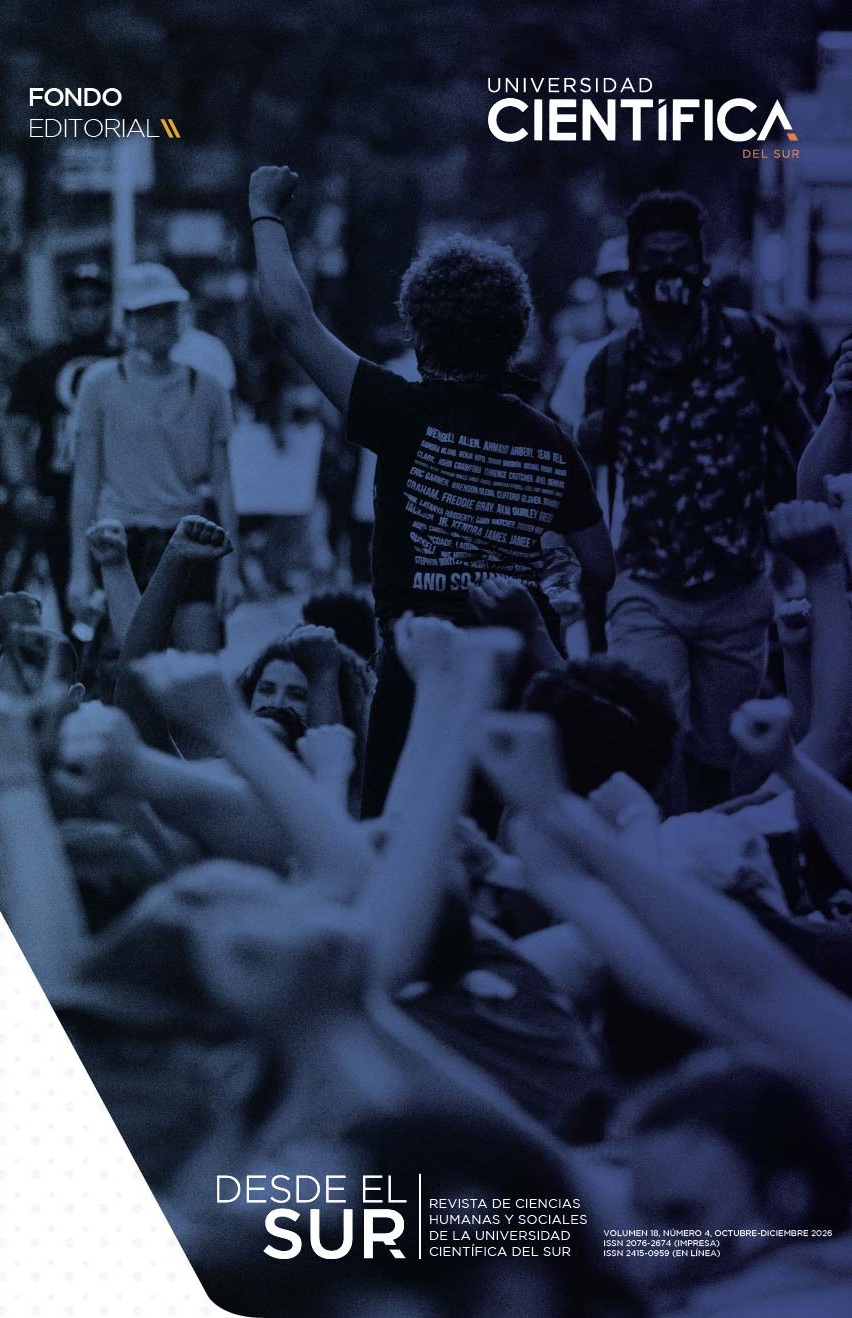
Youth Voices and Struggles for Recognition: Social Imaginaries and Sex-Gender Subjectivities in Chilean Public Schools
DOI:
https://doi.org/10.21142/DES-1804-2026-0095Keywords:
Inclusive education, sexual behavior, gender, youth, public schoolAbstract
This article examines the configuration of gender and sexuality subjectivities among Chilean public high school students, within the framework of inclusive education policy. Using a phenomenological-hermeneutic approach and the theory of social imaginaries, the study explores the meanings youth attribute to their sex-gender experiences. Conducted in three public schools in La Serena, it involved 49 students through seven focus groups and six in-depth interviews. Thematic analysis revealed the coexistence of instituted imaginaries—reinforcing binary, heteronormative logics—and instituting imaginaries that express resistance and alternative ways of inhabiting the body and desire. Seven analytical nodes were identified: sexuality, gender, sexual orientation, LGBTI+ identity, school coexistence, family dynamics, and recognition of the other. The study concludes that integral student formation requires a critical revision of the hidden curriculum, structural transformation of pedagogical practices, and an ethics based on the recognition of difference.
Downloads
References
Apple, M. W. (2008). Escuela, crítica y poder. Morata.
Benjamin, S., Nind, M., Hall, K., Collins, J. y Sheehy, K. (2003). Moments of inclusion and exclusion: Pupils negotiating classroom contexts. British Journal of Sociology of Education, 24(5), 547-558. https://doi.org/10.1080/0142569032000127125
Berger, P. L. y Luckmann, T. (2006). La construcción social de la realidad. Amorrortu.
Booth, T. y Ainscow, M. (2011). The Index for Inclusion: Developing learning and participation in schools. (3.ª ed.). Centre for Studies on Inclusive Education (CSIE).
Booth, T. y Ainscow, M. (2015). Index for Inclusion: Developing learning and participation in schools. (4.ª ed.). Centre for Studies on Inclusive Education.
Butler, J. (2006). Deshacer el género. (3.ª ed.). Paidós.
Butler, J. (2010 [1990]). Gender trouble: Feminism and the subversion of identity. (2.ª ed.). Routledge. https://doi.org/10.4324/9780203824979
Carr, W. y Kemmis, S. (1988). Teoría crítica de la enseñanza. La investigación-acción en la formación del profesorado. Martínez Roca.
Castoriadis, C. (1989). La institución imaginaria de la sociedad. Tusquets.
Chartier, R. (1992). El mundo como representación. Gedisa.
Cortés, J., Núñez Román, F. y Camacho, A. (2021). Actitud y uso del lenguaje no sexista en la formación inicial docente. Profesorado. Revista de Currículum y Formación del Profesorado, 25(1), 45-65. https://doi.org/10.30827/profesorado.v25i1.13807
De la Jara Plaza, B. (2024). Peruvian non-cisgender memory. Remnants of rupture and agency. Desde el Sur, 16(4), e0056. https://doi.org/10.21142/DES-1604-2024-0056
Denzin, N. K. y Lincoln, Y. S. (Eds.). (2018). The SAGE handbook of qualitative research. (5.ª ed.). SAGE Publications.
Díaz, J. y Meirieu, P. (2013). Educar en tiempos de incertidumbre: Entre la transmisión y la emancipación. Morata.
Elia, J. P. y Eliason, M. J. (2010). Discourses of exclusion: Sexuality education’s silencing of sexual others. Journal of LGBT Youth, 7(1), 29-48. https://doi.org/10.1080/19361650903507791
Epps, B., Markowski, M. y Cleaver, K. (2021). A rapid review and narrative synthesis of the consequences of non-inclusive sex education in UK schools on lesbian, gay, bisexual, transgender and questioning young people. The Journal of School Nursing, 39(2), 87-97. https://doi.org/10.1177/10598405211043394
Errázuriz, V. (2021). Becoming «Hijas de la Lucha»: Political subjectification, affective intensities, and historical narratives in a Chilean all-girls high school. Theory & Research in Social Education, 49(1), 27-53. https://doi.org/10.1080/00933104.2020.1857316
Fedorchenko, A. (2024). «Acceptance of diversity»... but not too much? (Restricted) pathways towards transgender and intersex inclusivity in sex education curriculum guidelines. The Curriculum Journal, 36, 384-399. https://doi.org/10.1002/curj.268
Fernández-Darraz, M. C., Matus-Castillo, C. y Figueroa, A. (2025). Career choices and gender dynamics: Exploring factors associated with the decision to study feminized careers in Chile. Desde el Sur, 17(3), e0064. https://www.scielo.org.pe/pdf/des/v17n3/2415-0959-des-17-03-e0064.pdf
Flick, U. (2018). An introduction to qualitative research. (6.ª ed.). SAGE Publications.
Foucault, M. (1979). Microfísica del poder. (2.ª ed.). Las Ediciones de La Piqueta.
Fraser, N. (2006). Reframing justice in a globalizing world. New Left Review, 36, 69-88.
Freire, P. (2005). Pedagogía del oprimido. (30.ª ed.). Siglo XXI.
Fricker, M. (2007). Epistemic injustice: Power and the ethics of knowing. Oxford University Press. https://doi.org/10.1093/acprof:oso/9780198237907.001.0001
Gadamer, H.-G. (1990). Verdad y método. Sígueme.
Gandler, S. (2010). Problemas de la convivencia democrática. Aportaciones a la teoría crítica desde México. Revista Internacional de Pensamiento Político, 5, 123-136. https://www.upo.es/revistas/index.php/ripp/article/view/1808
Gonick, M. y Conrads, J. (2022). Gender, sexuality, adolescence, and identity in schooling. Oxford Research Encyclopedia of Education. https://doi.org/10.1093/acrefore/9780190264093.013.1596
Hall, W., Jones, B. L. H., Witkemper, K. D., Collins, T. L. y Rodgers, G. K. (2019). State policy on school-based sex education: A content analysis focused on sexual behaviors, relationships, and identities. American Journal of Health Behavior, 43(3), 506-519. https://doi.org/10.5993/AJHB.43.3.6
Kosciw, J. G., Greytak, E. A., Zongrone, A. D., Clark, C. M. y Truong, N. L. (2020). The 2019 National School Climate Survey. The experiences of lesbian, gay, bisexual, transgender, and queer youth in our nation’s schools. GLSEN. https://files.eric.ed.gov/fulltext/ED608534.pdf
Lévinas, E. (1987). Ética e infinito. Diálogos con Philippe Nemo. Visor.
Lincoln, Y. S. y Guba, E. G. (1985). Naturalistic inquiry. SAGE Publications.
Louro, G. L. (2003). Um corpo estranho. Ensaios sobre sexualidade e teoria queer. Autêntica.
McGlashan, H. y Fitzpatrick, K. (2017). LGBTQ youth activism and school: Challenging sexuality and gender norms. Health Education, 117(5), 485-497. https://doi.org/10.1108/HE-10-2016-0053
Montenegro-González, M., Rivas, D. y Ortega, A. (2025). Posicionamientos onto-epistemológicos y éticos frente al género en la enseñanza del arte. Desde el Sur, 17(2), e0024. https://www.scielo.org.pe/pdf/des/v17n2/2415-0959-des-17-02-e0024.pdf
Morse, J. M., Barrett, M., Mayan, M., Olson, K. y Spiers, J. (2002). Verification strategies for establishing reliability and validity in qualitative research. International Journal of Qualitative Methods, 1(2), 13-22. https://doi.org/10.1177/160940690200100202
Novak, J. D. y Cañas, A. J. (2008). The theory underlying concept maps and how to construct them. Technical Report IHMC CmapTools 2006-01 Rev 01-2008. Florida Institute for Human and Machine Cognition. https://cmap.ihmc.us/docs/theory-of-concept-maps
Organización de las Naciones Unidas para la Educación, la Ciencia y la Cultura (Unesco). (2016). Orientaciones técnicas internacionales sobre educación en sexualidad: Un enfoque basado en la evidencia. https://unesdoc.unesco.org/ark:/48223/pf0000260770
Organización de las Naciones Unidas para la Educación, la Ciencia y la Cultura (Unesco). (2020). Global Education Monitoring Report: Inclusion and education: all means all. https://unesdoc.unesco.org/ark:/48223/pf0000373718
Pascoe, C. J. (2007). Dude, you’re a fag. Masculinity and sexuality in high school. University of California Press.
Patton, M. Q. (2015). Qualitative research & evaluation methods. Integrating theory and practice. (4.ª ed.). SAGE Publications.
Pedreros, P. y Castro, R. (2024). Representaciones sociales de estudiantes de enseñanza media en la convivencia escolar entre la comunidad durante la pandemia COVID-19. Revista Reflexión e Investigación Educacional (REINED), 5(1), 31-45. https://doi.org/10.22320/reined.v5i1.6234
Santos, B. de S. (2010). Refundación del Estado en América Latina. Perspectivas desde una epistemología del Sur. Siglo XXI y CLACSO.
Seguel-Arriagada, A. y Jiménez-Pérez, L. (2024). Configuraciones de significado sobre identidad sexual del cuerpo académico de una universidad del sur de Chile. Desde el Sur, 16(4), e0057. https://www.scielo.org.pe/pdf/des/v16n4/2415-0959-des-16-04-e0057.pdf
Skliar, C. (2006). ¿Y si el otro no estuviera ahí? Notas para una pedagogía (improbable). Miño y Dávila.
Strauss, A. y Corbin, J. (2002). Bases de la investigación cualitativa. Técnicas y procedimientos para desarrollar la teoría fundamentada. Universidad de Antioquia.
Tapia Gutiérrez, C. P., Peña, S. y Herrera, J. M. (2020). Gestión de la convivencia escolar: del aseguramiento a la necesidad de fortalecer la formación socioemocional. Revista Electrónica Calidad en la Educación Superior, (13), 325-351. https://dialnet.unirioja.es/servlet/articulo?codigo=7341383
Taylor, C. (2006). Modern social imaginaries. Duke University Press.
Tiramonti, G. (2012). La trama de la desigualdad educativa. Mutaciones recientes en la escuela media. Manantial.
Valdivia, A., Ibáñez, M. J. y Rojas, F. (2023). Becoming a political subject through affect and social media in feminist student movements in a Chilean school. Gender and Education, 35(6), 774-789. https://doi.org/10.1080/09540253.2023.2242887
Downloads
Published
Issue
Section
License

Esta obra está bajo una licencia http://creativecommons.org/licenses/by-nc-sa/4.0/