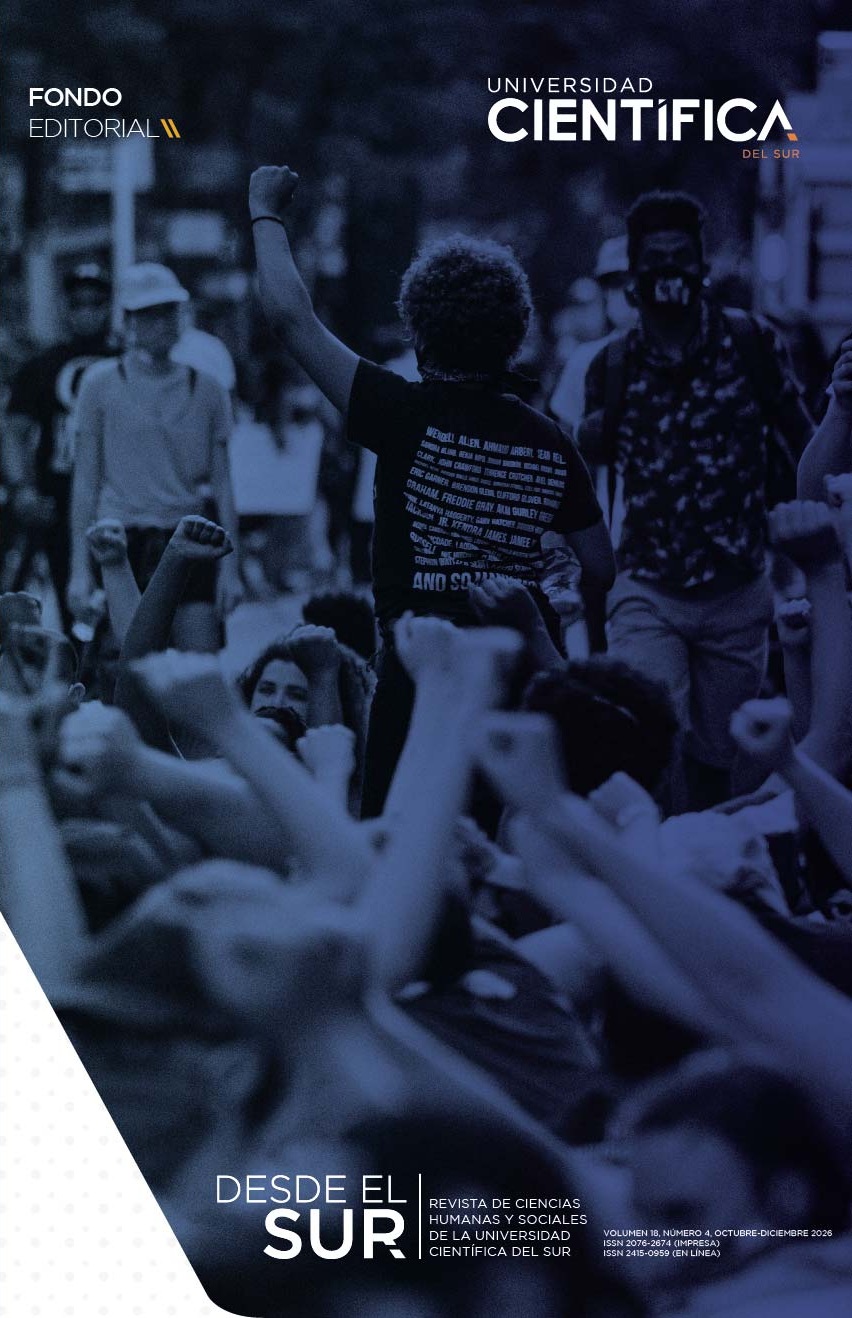
From emergence to trace: vaccine hesitancy as informal mobilization on Brazilian Facebook and its impacts on sanitary democracy (2014-2022)
DOI:
https://doi.org/10.21142/DES-1804-2026-0085Keywords:
Vaccination, social movement, disinformation, political polarizationAbstract
This article analyzes HPV vaccine hesitancy on Brazilian Facebook. The vaccine, free and scientifically robust, faced growing resistance from 2014 onward, with coverage persistently below target. The objective is to demonstrate that this hesitancy is not an individual information deficit but a form of platform-mediated informal mobilization. Methodologically, the study combines qualitative content analysis and descriptive analysis of engagement metrics across 1,064 publications collected via the Meta Content Library API at three milestones: 2014, 2017, and 2022. Results reveal three phases: initial panic amplified by the mainstream press (2014); politicization linked to the Bolsonarist ecosystem (2017); and demobilization on the platform (2022). It concludes that, although the debate has subsided on Facebook, its effects on low vaccination coverage persist as lasting traces for sanitary democracy.
Downloads
References
Balieiro, F. F. (2018). «Não se meta com meus filhos»: A construção do pânico moral da criança sob ameaça. Cadernos Pagu, (53), e185306. https://www.scielo.br/j/cpa/a/KttpD5GkPYPjH69DZxw6VcL/abstract/?lang=pt
Bardin, L. (2016). Análise de conteúdo. Edições 70.
Bennett, W. L. e Segerberg, A. (2012). The logic of connective action: Digital media and the personalization of contentious politics. Information, Communication & Society, 15(5), 739-768. https://www.tandfonline.com/doi/abs/10.1080/1369118x.2012.670661
Bilewicz, M. e Soral, W. (2022). The politics of vaccine hesitancy: An ideological dual-process approach. Social Psychological and Personality Science, 13(6), 1080-1089. https://journals.sagepub.com/doi/10.1177/19485506211055295
Brasil. (2015). Pesquisa Brasileira de Mídia 2015: Hábitos de consumo de mídia pela população brasileira. Secretaria de Comunicação Social da Presidência da República.
Carlos, E. (2011). Contribuições da análise de redes sociais às teorias de movimentos sociais. Revista de Sociologia e Política, 19(39), 153-166. https://www.scielo.br/j/rsocp/a/HPcYGvswbvdFjJGGpLnk6Zd/?lang=pt
César, M. R. A. e Duarte, A. M. (2017). Governamento e pânico moral: Corpo, gênero e diversidade sexual em tempos sombrios. Educar em Revista, (66), 141-155. https://www.scielo.br/j/er/a/KfwSdvDGNG4q7DQvmg4N9pG/?format=pdf&lang=pt
Cohen, S. (1972). Folk devils & moral panics. The creation of the mods and rockers. MacGibbon and Kee.
Corrêa, E. C. D. e Garcês da Silva, F. C. (2017). Presença digital dos Conselhos Regionais de Biblioteconomia do Brasil no Facebook. Perspectivas em Ciência da Informação, 22, 16-32.
Diani, M. (1992). The concept of social movement. Sociological Review, 40(1), 1-25. https://journals.sagepub.com/doi/10.1111/j.1467-954X.1992.tb02943.x
Diani, M. e Bison, I. (2010). Organizações, coalizões e movimentos. Revista Brasileira de Ciência Política, (3), 219-250. https://periodicos.unb.br/index.php/rbcp/article/view/1681
Goldenberg, M. J. (2021). Vaccine hesitancy. Public trust, expertise, and the war on science. University of Pittsburgh Press.
Kemp, S. (2022). Digital 2022: Brazil. DataReportal. https://datareportal.com/reports/digital-2022-brazil
McAdam, D., Tarrow, S. e Tilly, C. (2001). Dynamics of contention. Cambridge University Press.
Melucci, A. (1989). Nomads of the present. Social movements and individual needs in contemporary society. Hutchinson Radius.
Melucci, A. (1996). Challenging codes. Collective action in the information age. Cambridge University Press.
Mesch, G. S. e Schwirian, K. P. (2015). Social and political determinants of vaccine hesitancy: Lessons learned from the H1N1 pandemic of 2009-2010. American Journal of Infection Control, 43(11), 1161-1165. https://pmc.ncbi.nlm.nih.gov/articles/PMC7132648/
Moura, L. L., Codeço, C. T. e Luz, P. M. (2021). Cobertura da vacina papilomavírus humano (HPV) no Brasil: Heterogeneidade espacial e entre coortes etárias. Revista Brasileira de Epidemiologia, 24, e210001. https://www.scielo.br/j/rbepid/a/TStbZmwdZTG3rmZZFsqvNFx/?lang=pt
Tarrow, S. (2011). Power in movement. Social movements and contentious politics. (3ª ed.). Cambridge University Press.
Van Dijk, T. A. (2024). Discourse and ideologies of the radical right. Cambridge University Press.
Wardle, C. e Derakhshan, H. (2017). Information disorder: Toward an interdisciplinary framework for research and policy making. Council of Europe.
Wardle, C. e Derakhshan, H. (2023). Desordem informacional: Um guia para as respostas mais urgentes. UNESCO.
Wodak, R. (2015). The politics of fear. What right-wing populist discourses mean. Sage Publications.
Downloads
Published
Issue
Section
License

Esta obra está bajo una licencia http://creativecommons.org/licenses/by-nc-sa/4.0/